Rosenthal
Biscuit Jar: Rosenthal Sanssouci, Cherub Angels, Victorian Style, Germany, Antique 1891 - SOLD
Biscuit Jar: Rosenthal Sanssouci, Cherub Angels, Victorian Style, Germany, Antique 1891 - SOLD
Couldn't load pickup availability
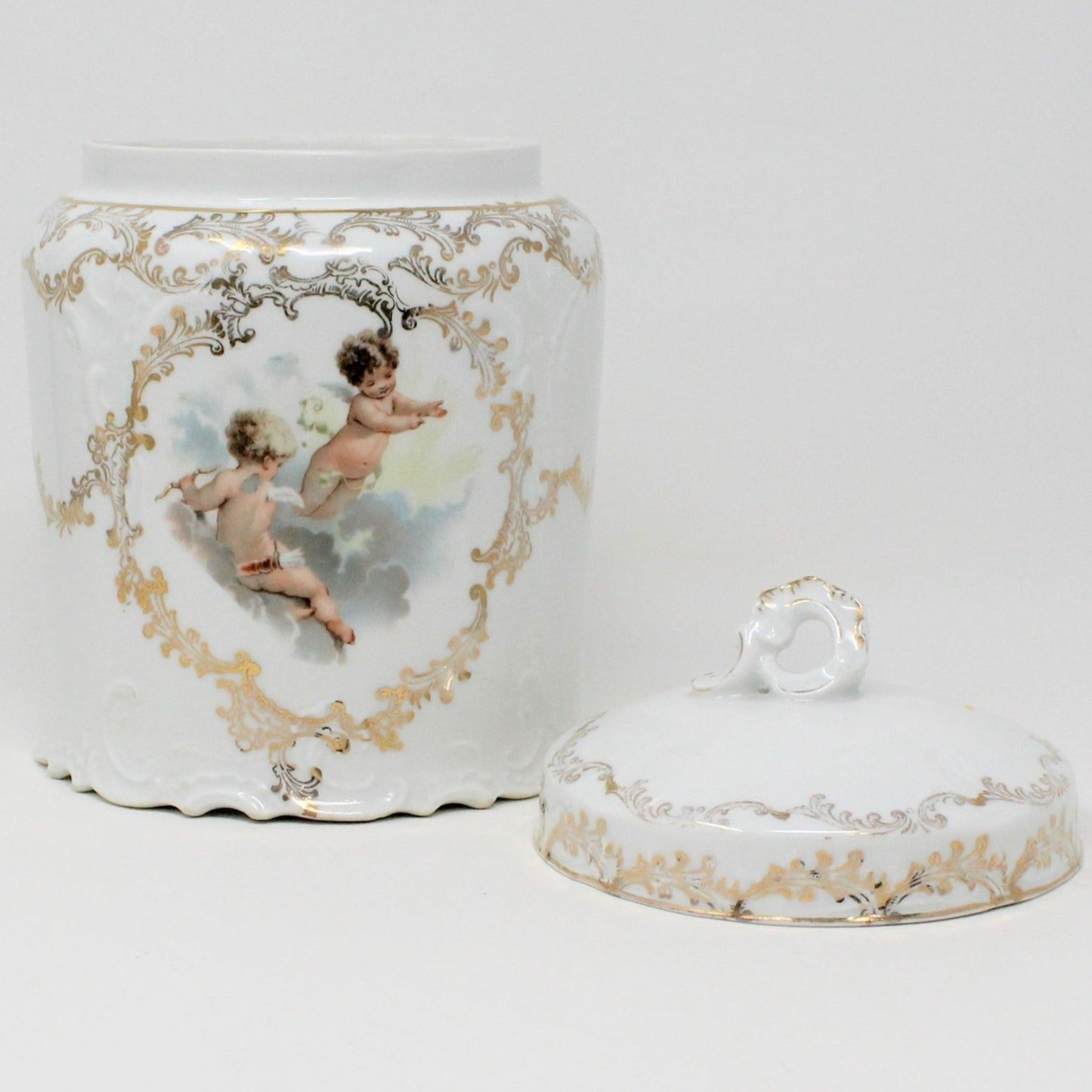
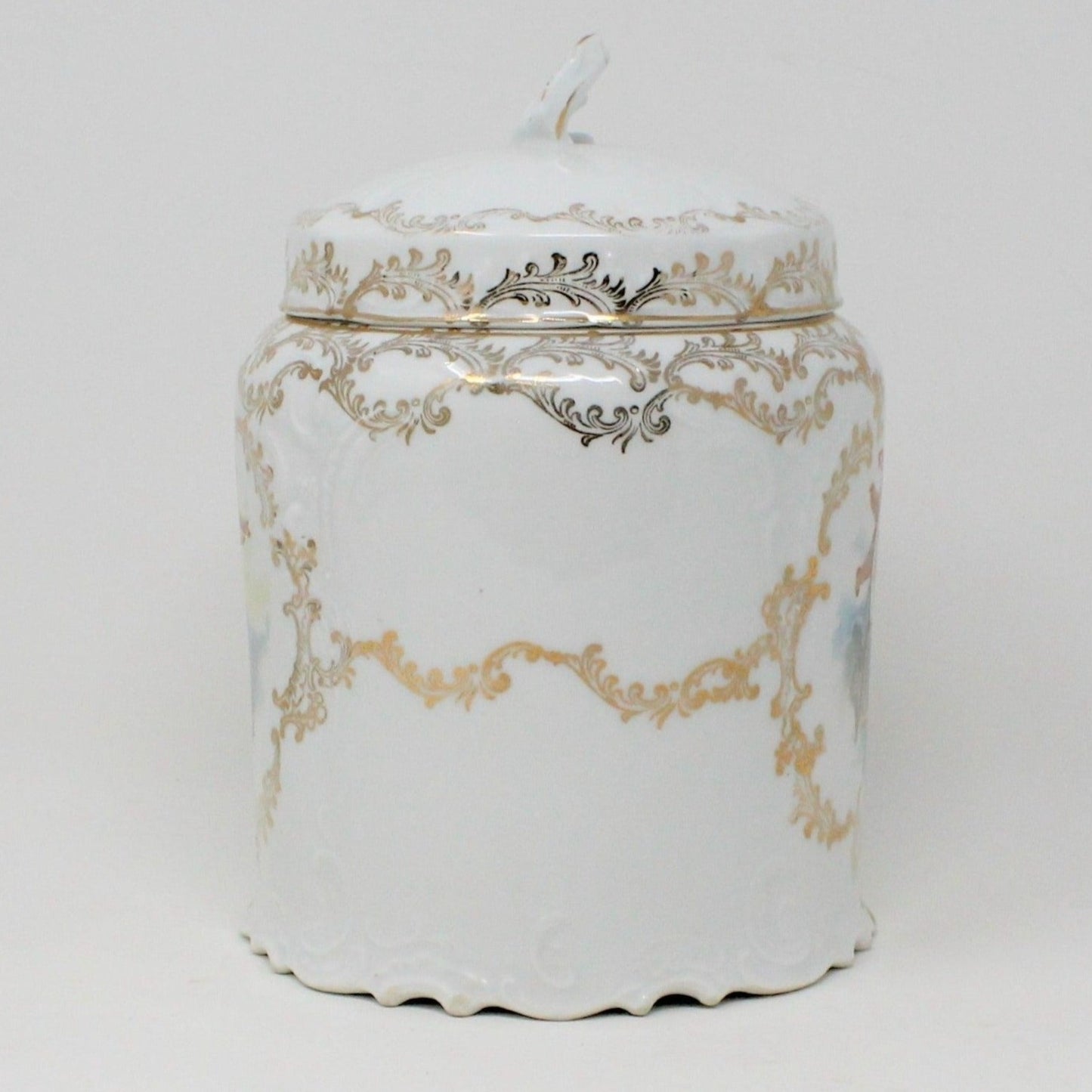
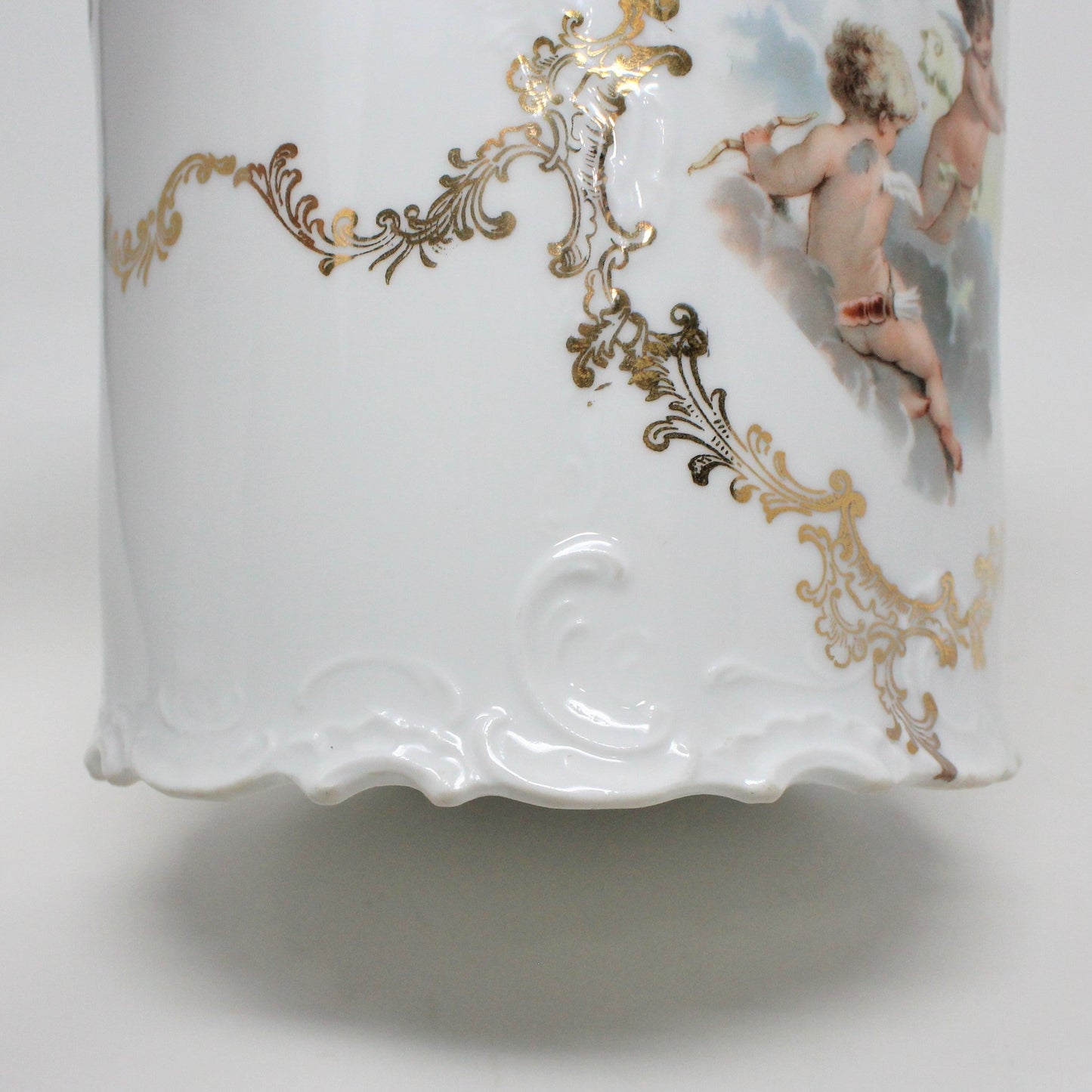
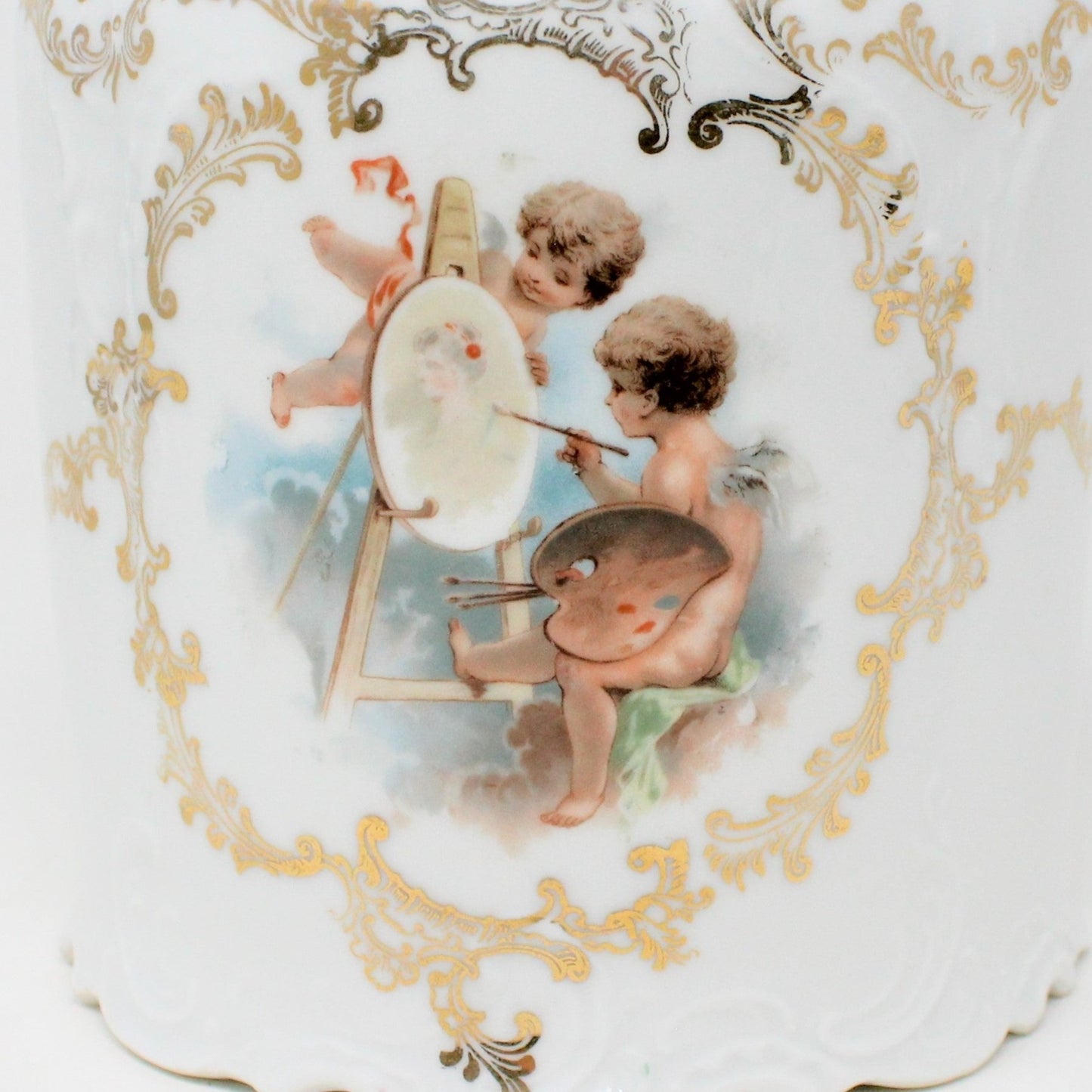
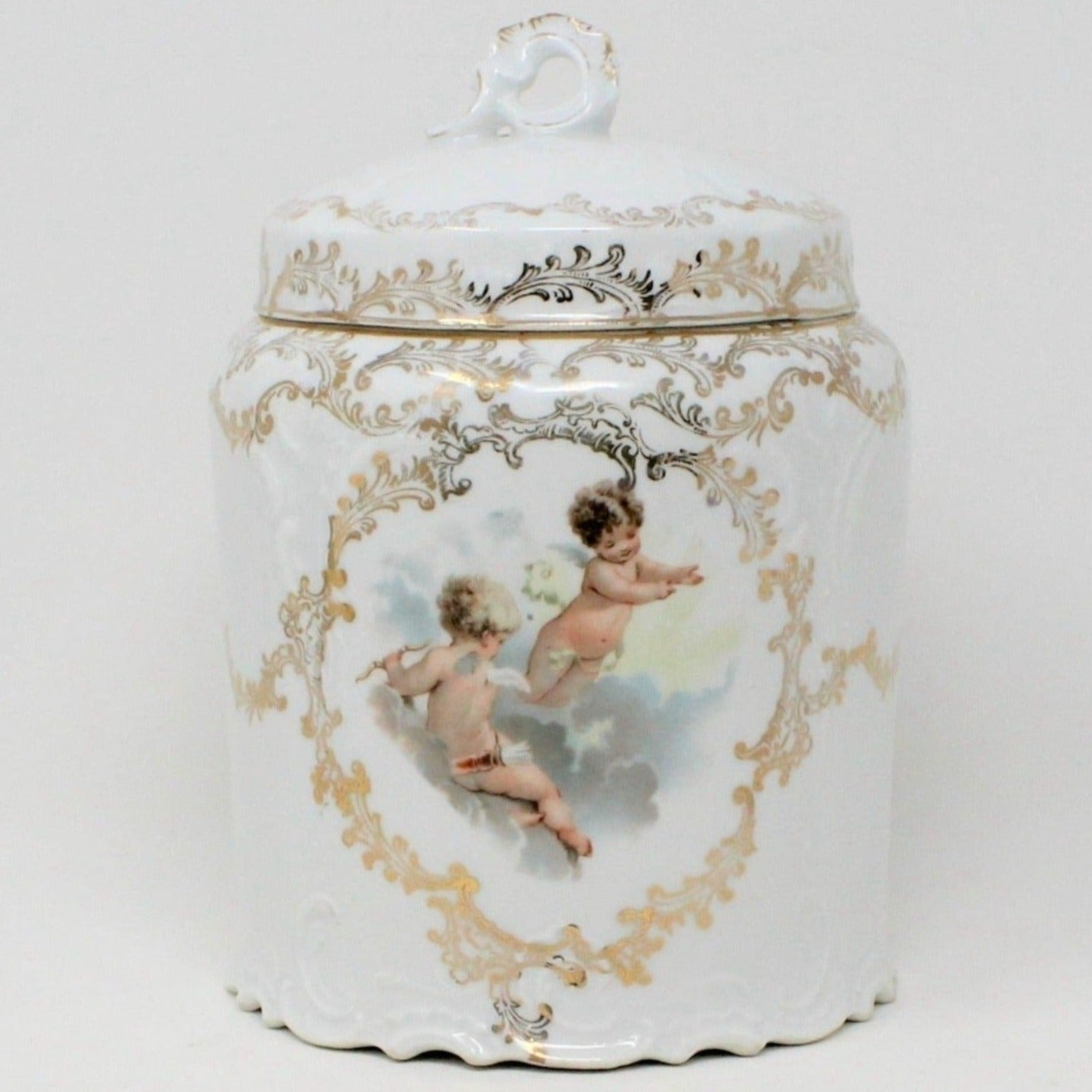
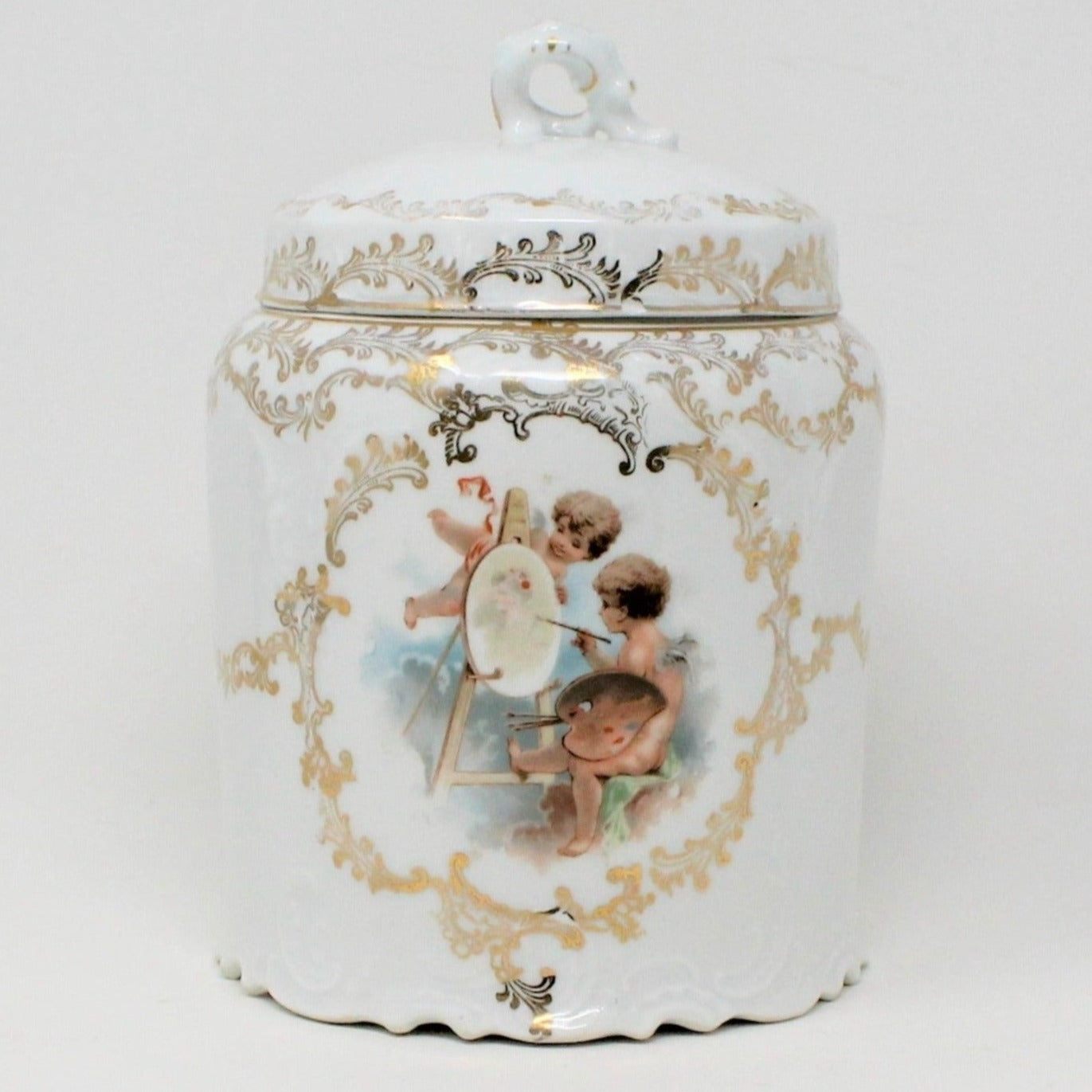
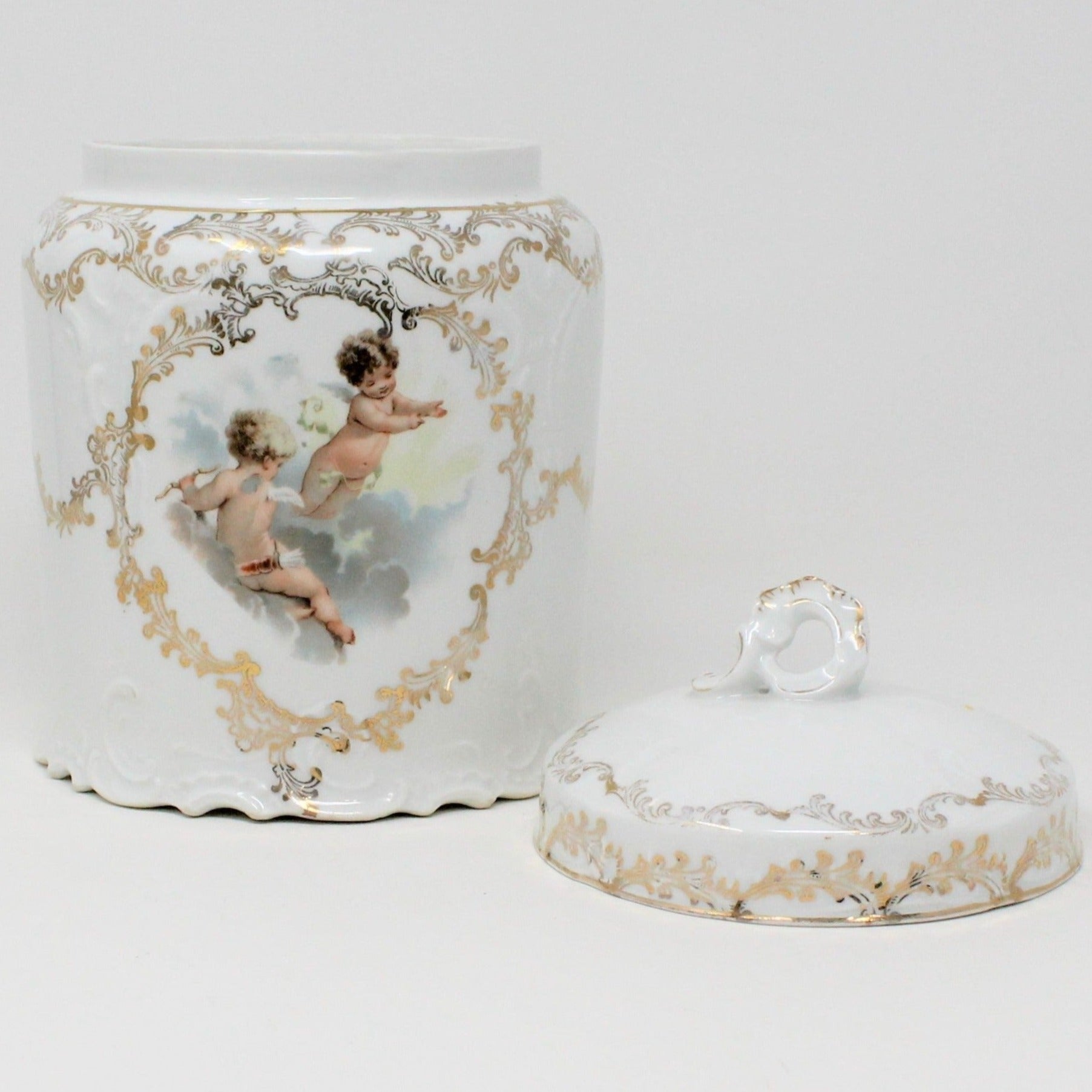
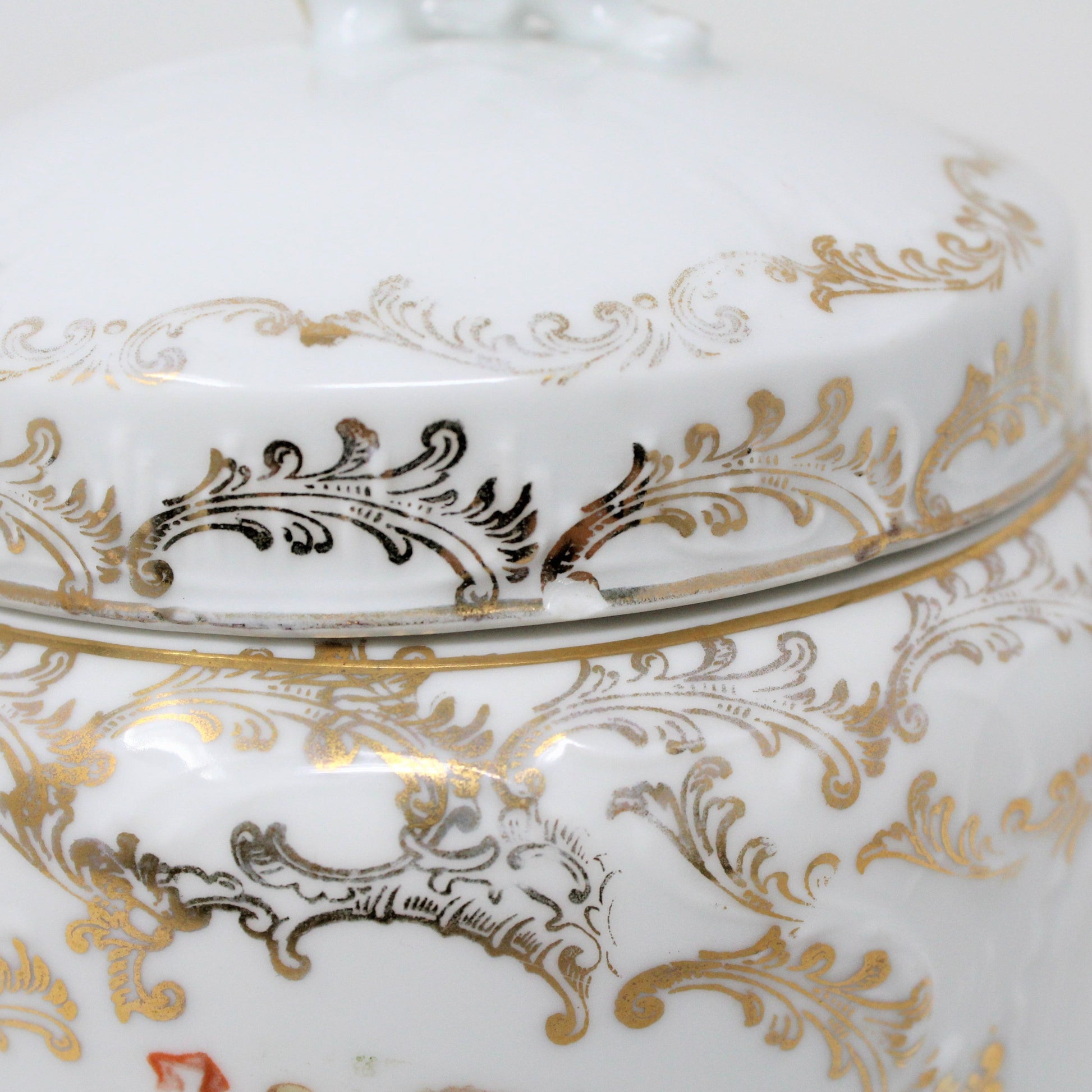
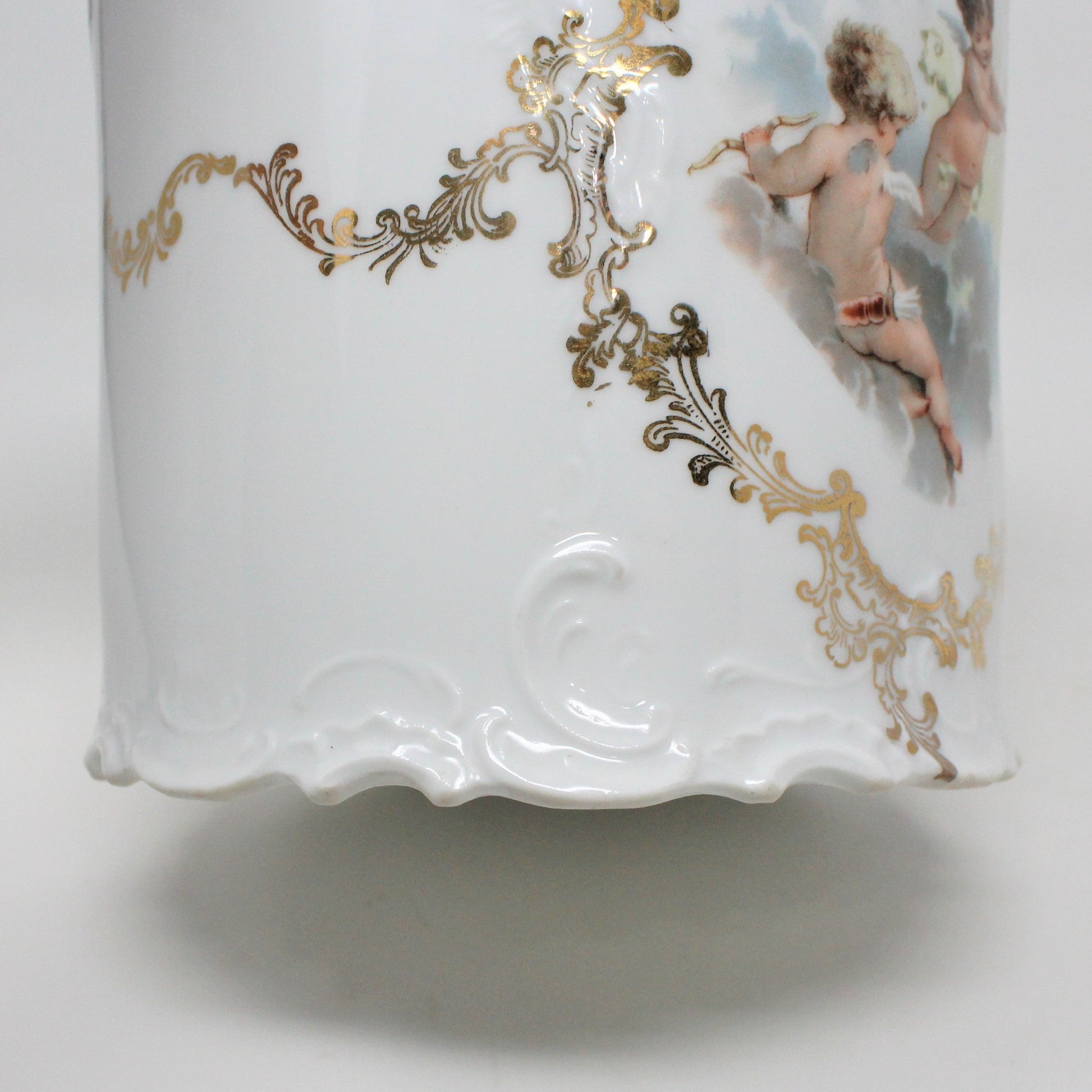
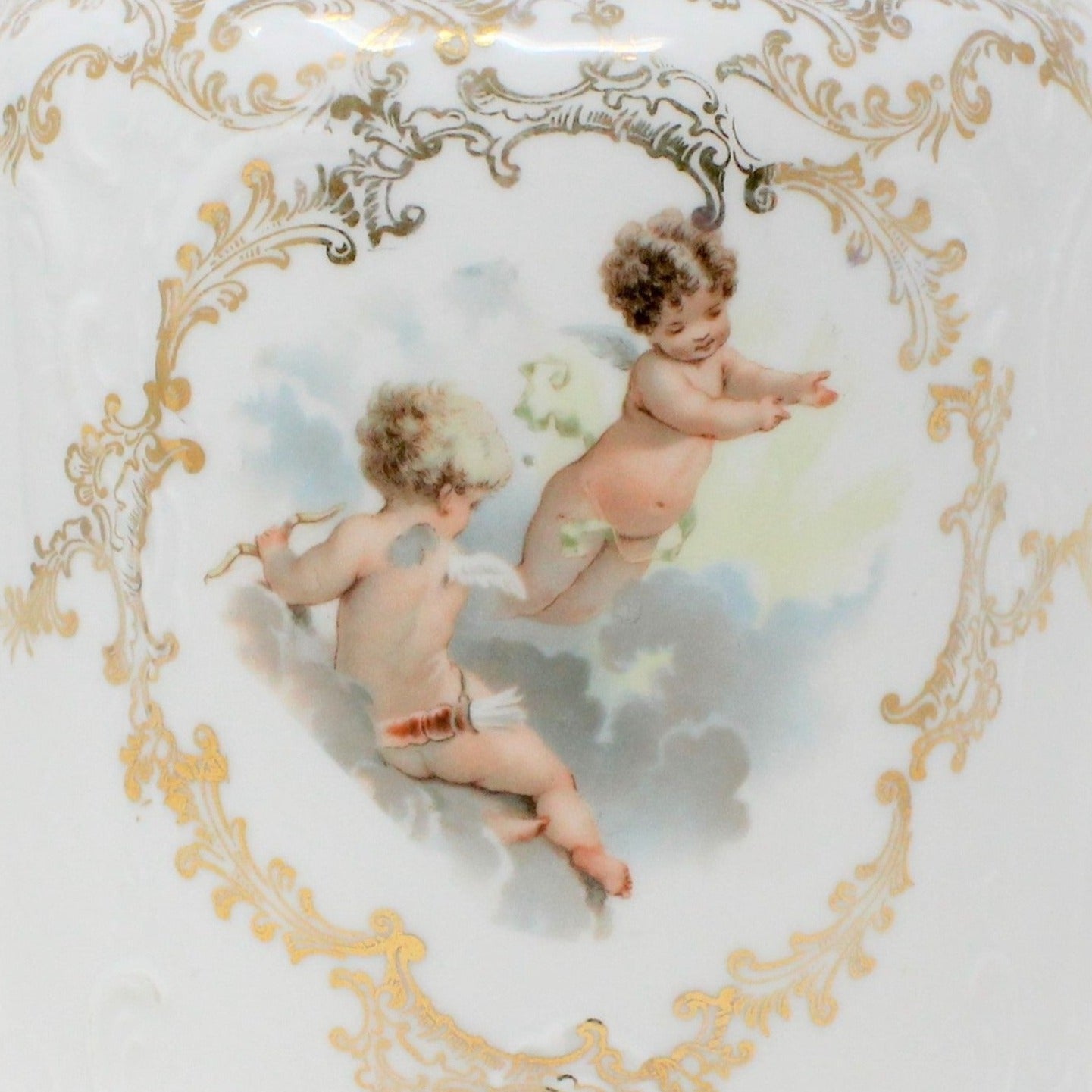
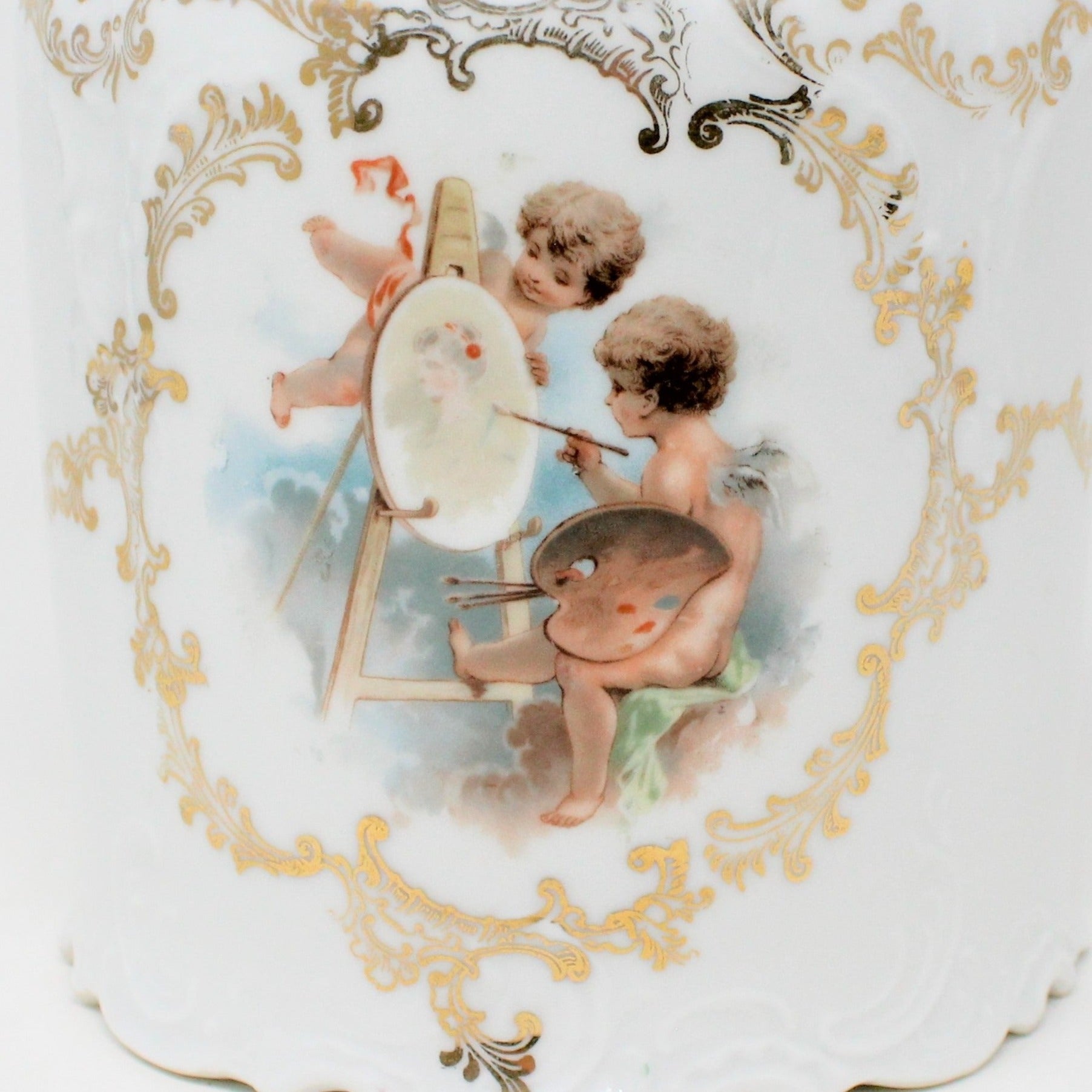
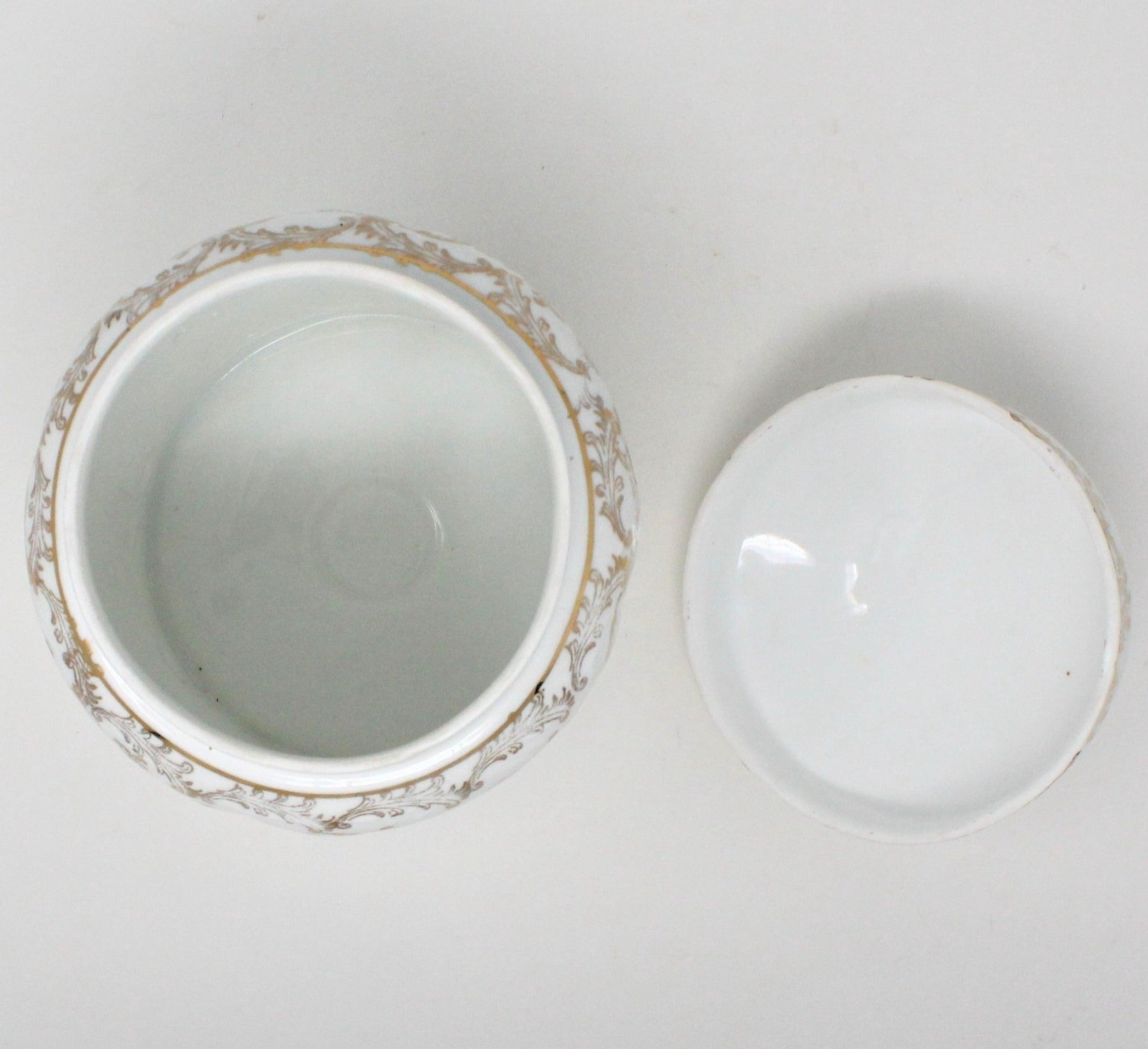
A Rosenthal Sanssouci biscuit jar in Victorian style, embossed in the pattern of the Sanssouci palace ceiling, with cherubs playing in the clouds and painting.
- Maker: Rosenthal
- Pattern: Sanssouci
- Materials: Porcelain
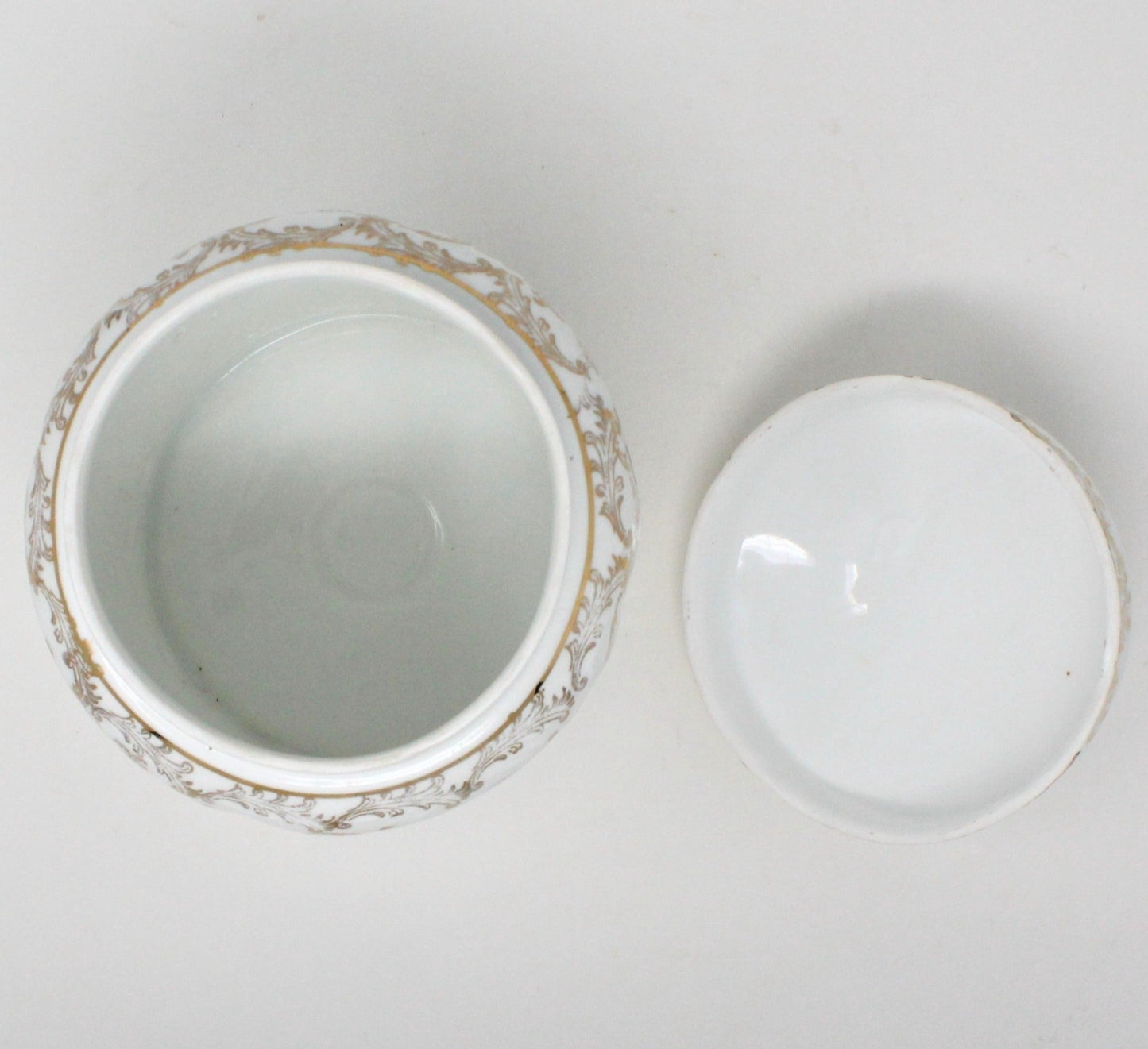
- Dimensions: 7.75 inches Tall (with lid), 5.5 inches Tall (without lid), approx. 5.0 inches in Diameter
- Origin: Germany
- Era: Antique, 1891–1906
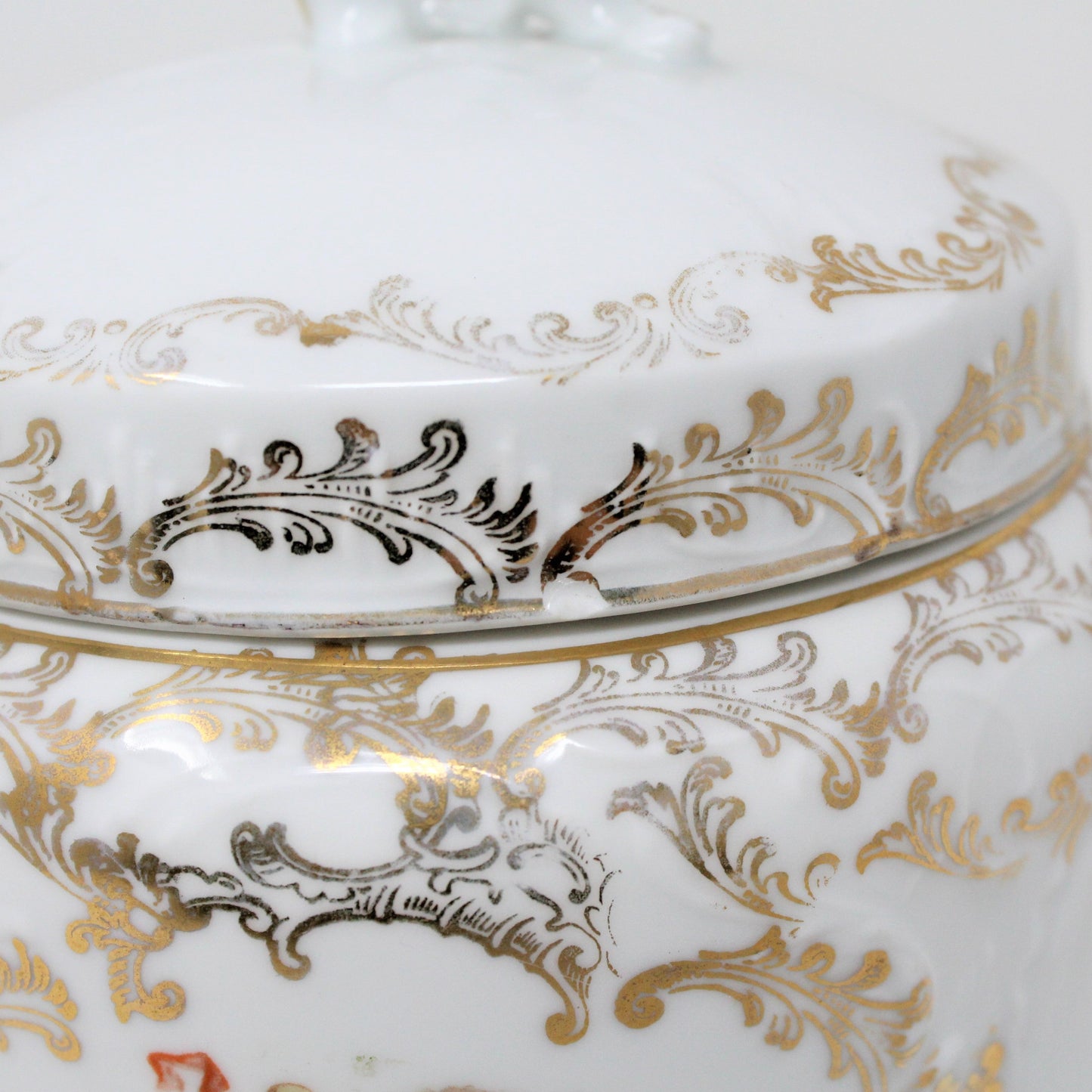
- Condition: Very Good — one very small chip on the lid, photographed for you. Otherwise there are no cracks or scratches, and the decorations (decals and gold) are in perfect condition. Please review photos closely before purchasing, as all sales are final.
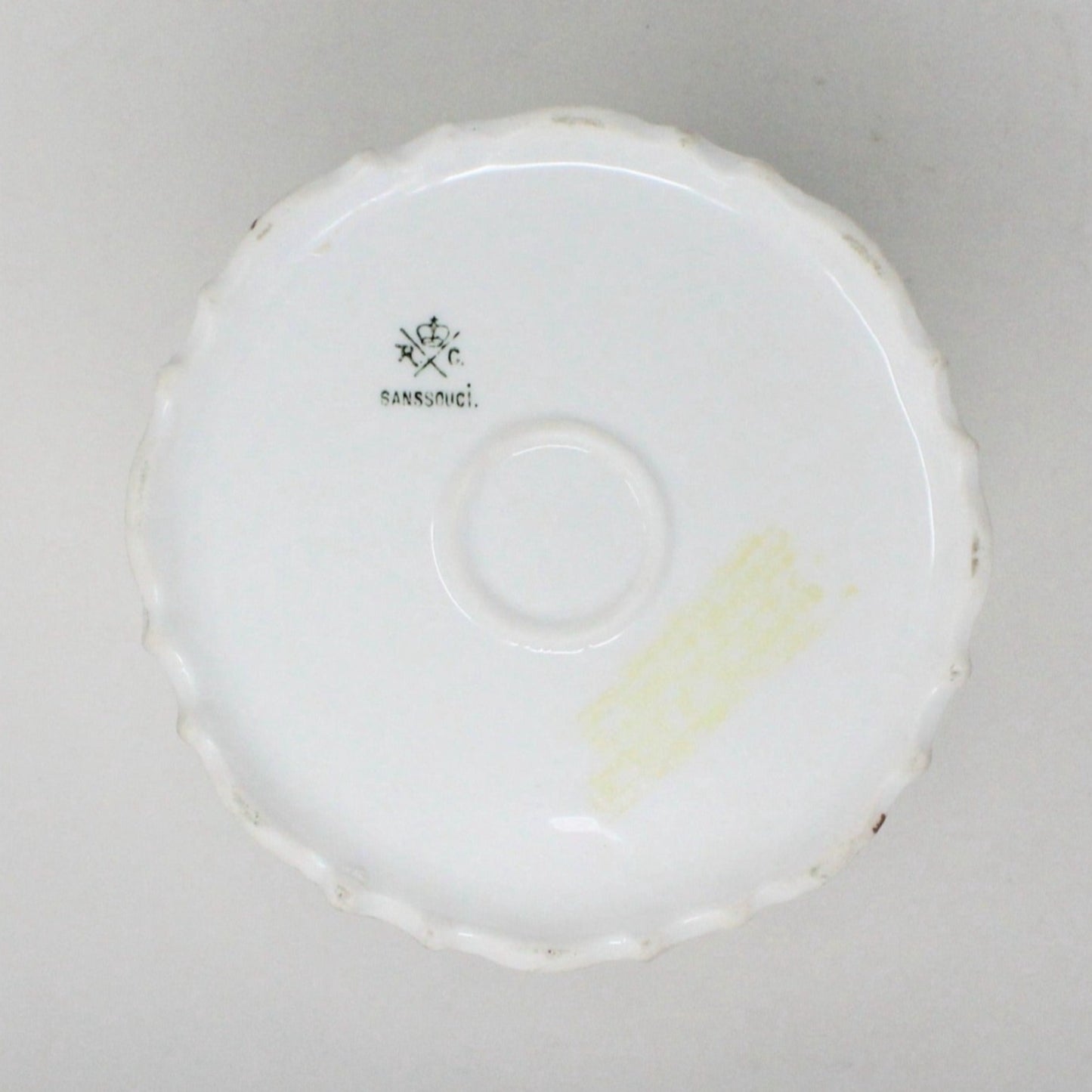
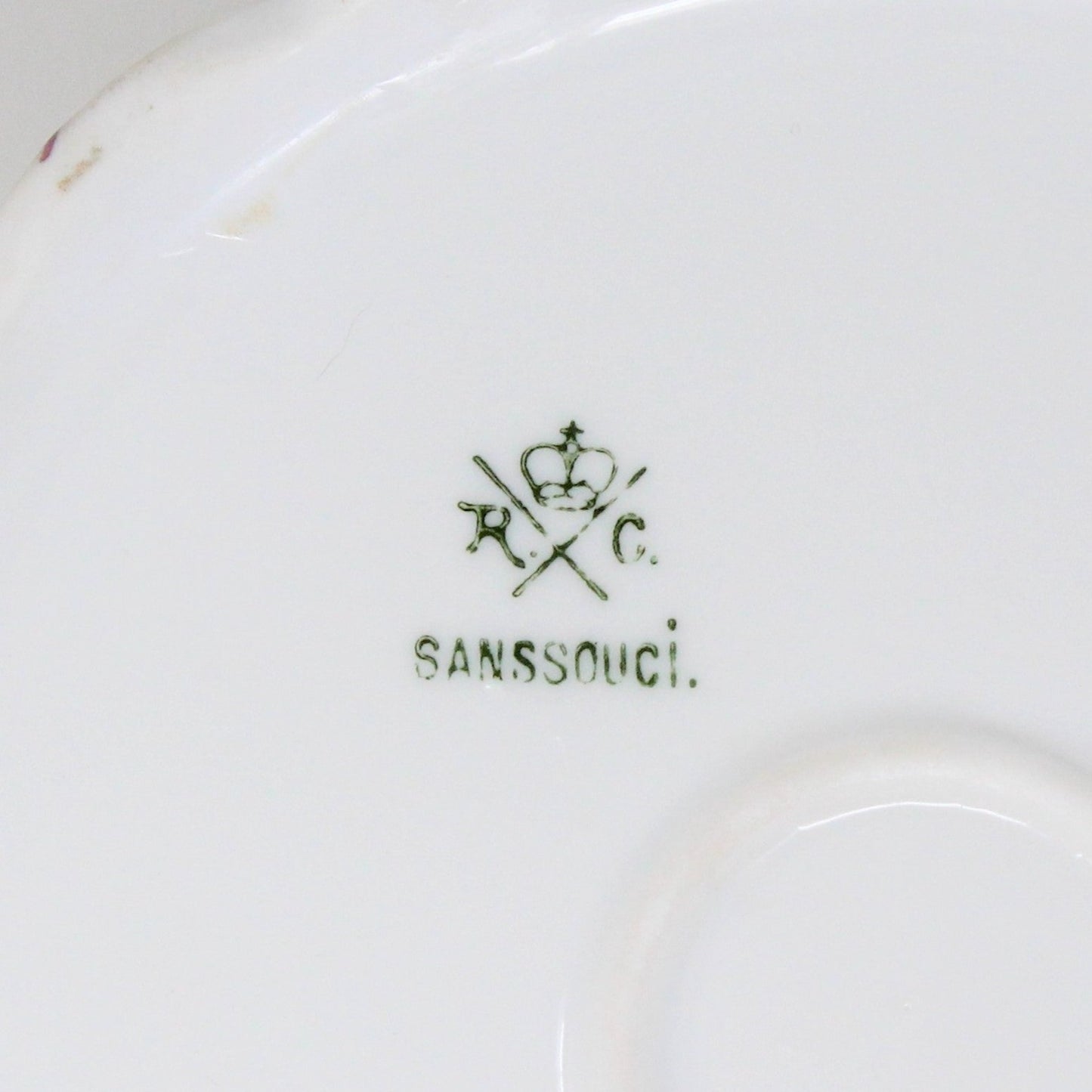
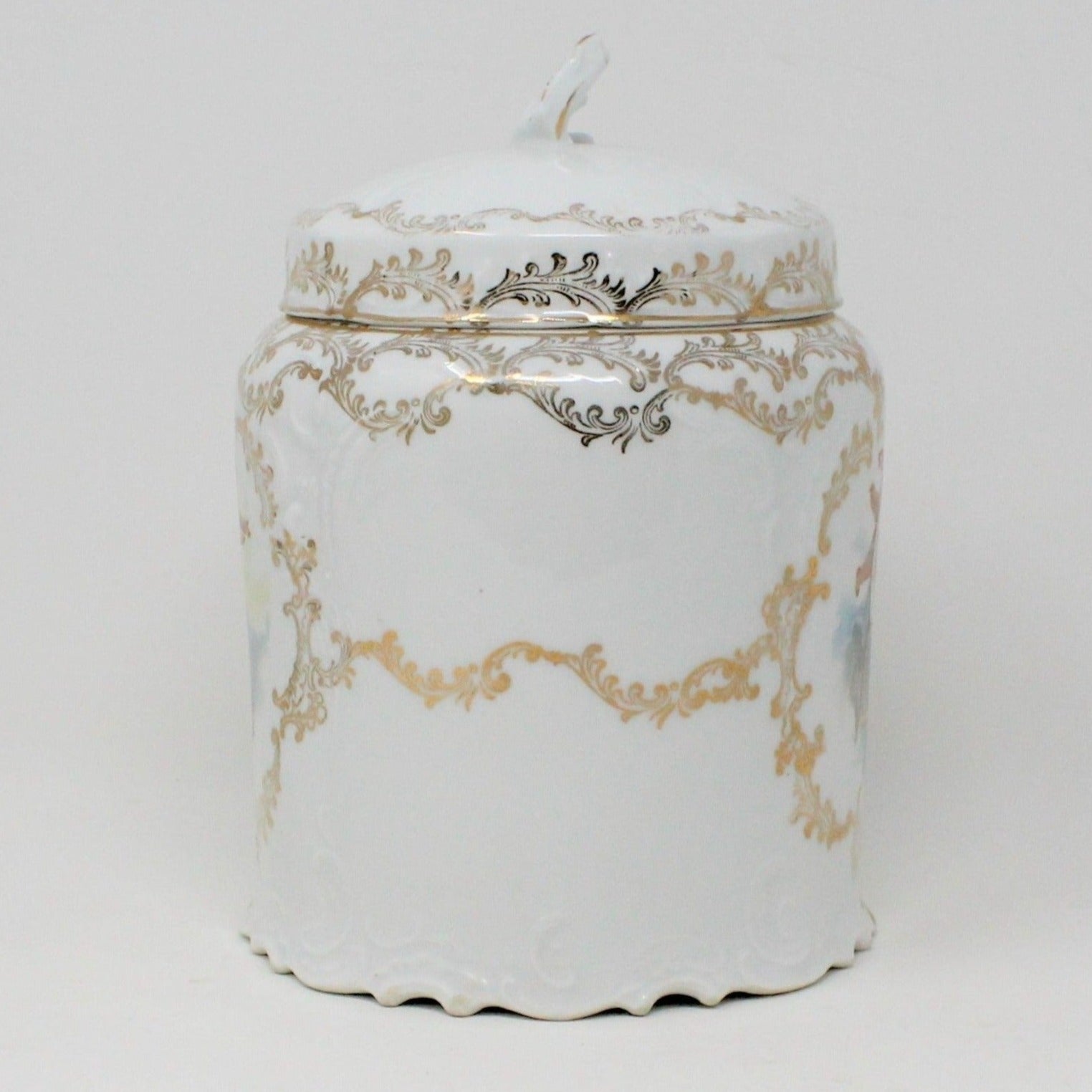
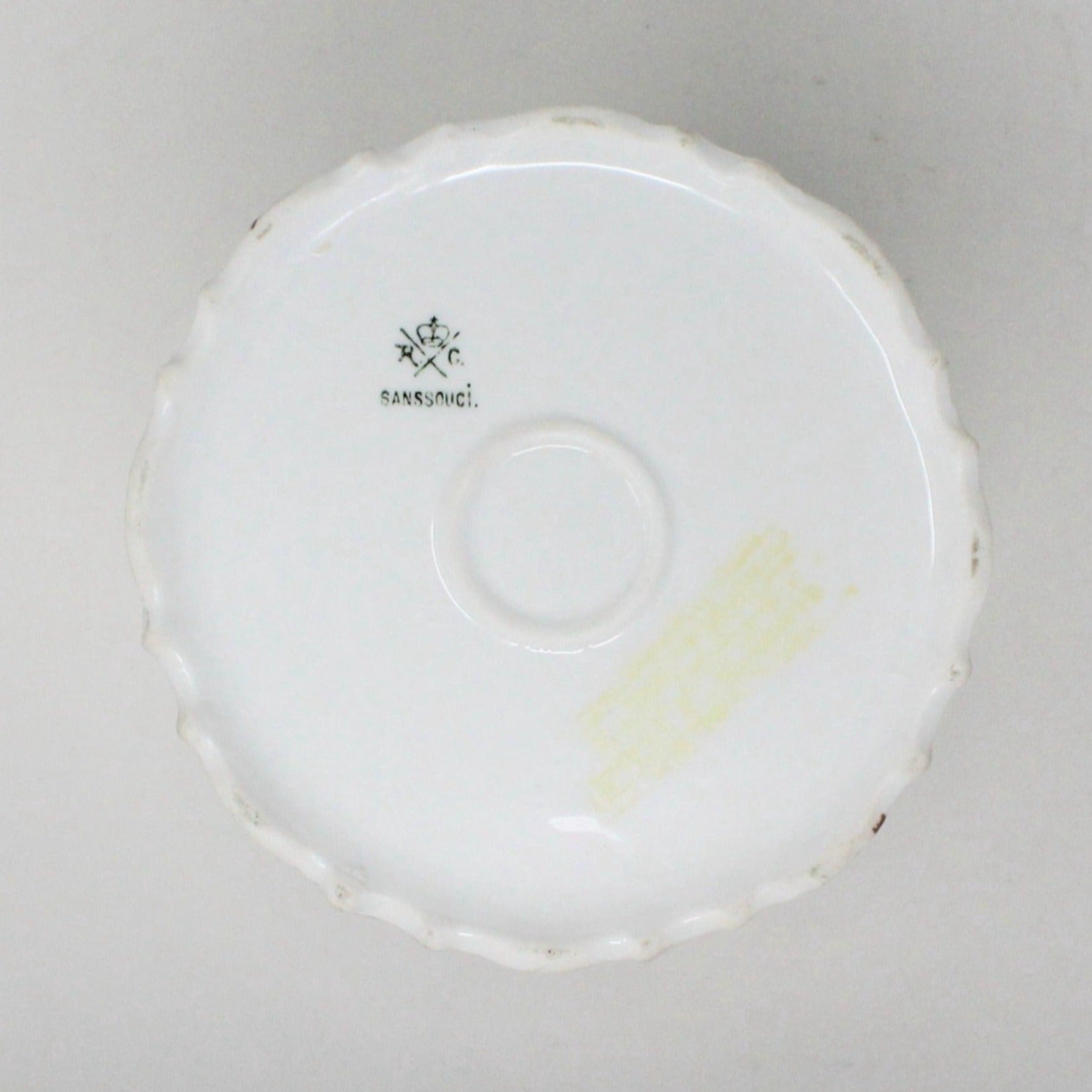
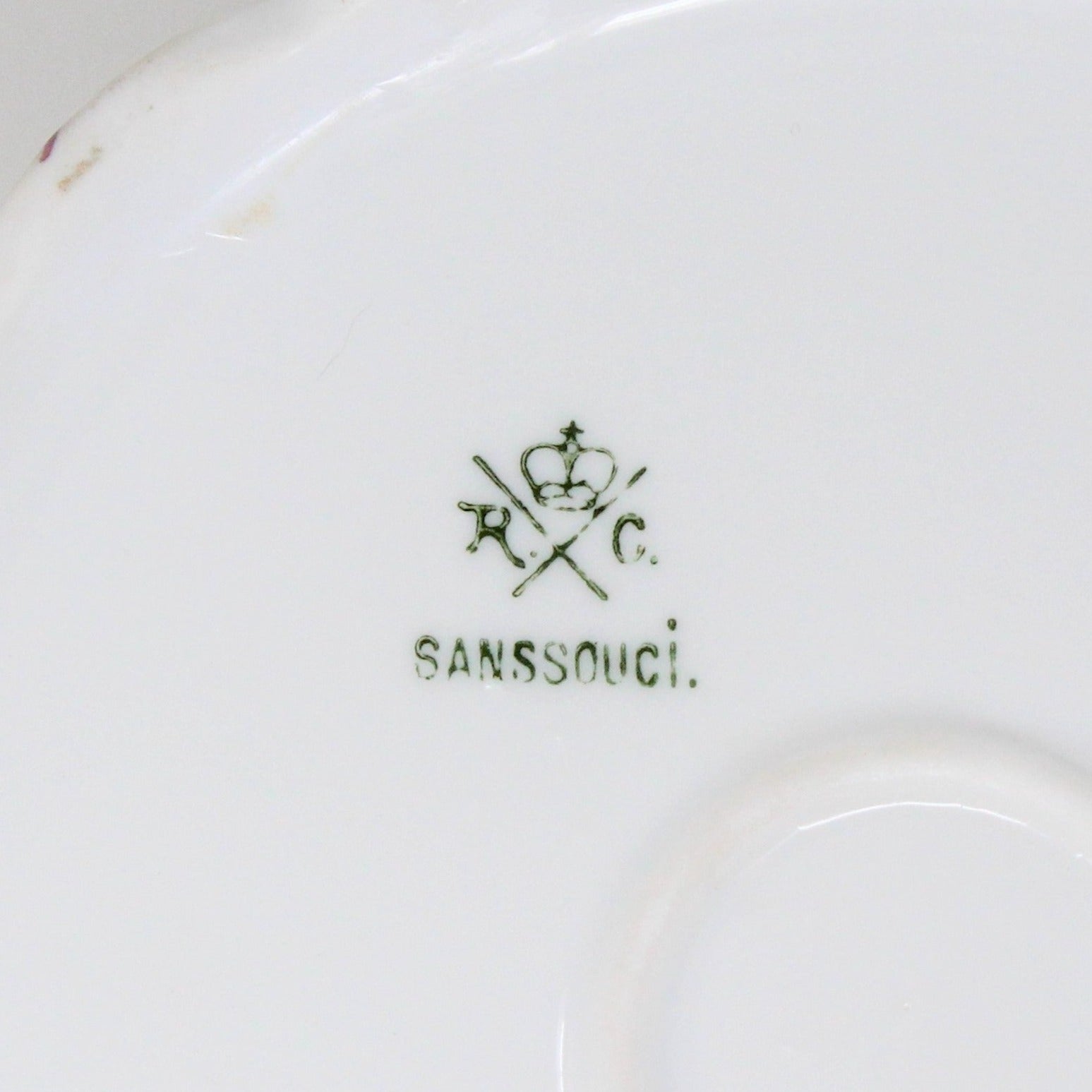
An absolutely gorgeous biscuit jar with a lot of history behind it. Based on the back stamp, we are pretty confident this is an antique, as this mark was used between 1891 and 1906; however, we are not experts, so if the exact age is important to you, please research. It has an elaborate embossed pattern that is a replica of the stucco ceiling of the Sanssouci palace in Potsdam, near Berlin, hence the name, and truly a gorgeous design. There are two adorable cherubs playing in the clouds on one side and cherubs painting on the other, with lots of hand painted gold accents all around the piece.
If you are a Rosenthal collector, we hope this find brings you great joy. A wonderful addition to your next tea party or display cabinet, and a most generous Valentine's Day or Mother's Day gift.
The Sanssouci pattern goes back to when Frederick the Great built the "Castle Sanssouci" in Potsdam in 1745. He ordered a set of tableware just for the palace from KPM, the manufacturer to the royals at the time. KPM developed the relief porcelain to mimic the Rococo stucco ceiling of the "Great Hall" in the castle. Although the Sanssouci pattern was highly popular and copied by many different manufacturers, Rosenthal was the only one that acquired the license from KPM to produce this porcelain true to the original.
Rosenthal was founded in 1879 as a family business by Philipp Rosenthal, who would purchase white ware from Hutschenreuther and sell designs, hand painted by his wife Maria, door to door. In 1891 he established a factory in Asch, Bohemia, and began production of white ware for use in his workshop. From 1897 to 1936 Rosenthal acquired several factories, and the popularity of the "Maria White" and "Moss Rose" patterns helped the business grow rapidly. Philipp Rosenthal died in 1937. The company has a long history and went through several changes and acquisitions, as well as numerous political issues during WWII, when Rosenthal porcelain was distributed in the USA by Rosenthal-Block China Corporation, a company founded by Joseph Block. Philip Rosenthal, Philipp's son, came into the business in the 1950s and grew it to be the market leader for high-quality porcelain and glassware in Germany. In 1969 the name Rosenthal Glas & Porzellan was shortened to Rosenthal AG. There is now a "Rosenthal Archive," a collection of around 15,000 exhibits from 130 years of company history, in the Porzellanikon State Museum of Porcelain in Hohenberg, Germany, including nearly all product designs from the company's foundation to today, as well as originals designed by artists such as Salvador Dalí, Andy Warhol, Wilhelm Wagenfeld, Raymond Loewy, and Walter Gropius.
Browse our shop for more fine porcelain to round out your collection.
Share